
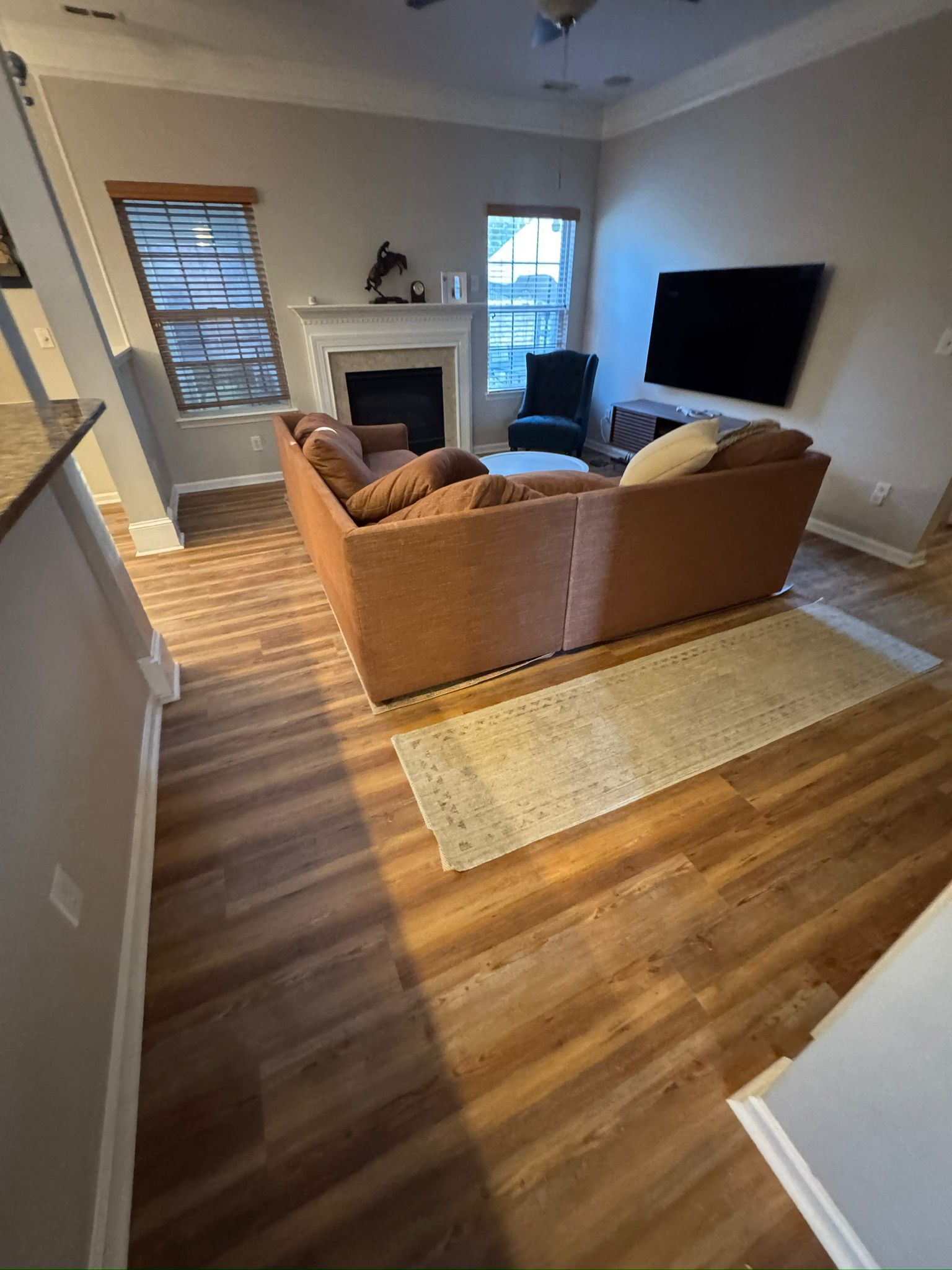
Does LVP increase home resale value as much as hardwood?
Generally, no. While LVP offers convenience, it does not appreciate in value. Hardwood is considered a capital improvement that typically offers a 70-80% return on investment and increases the resale appeal of a luxury home.
Which flooring is better for high-moisture areas?
LVP is 100% waterproof, making it ideal for basements and laundry rooms. Hardwood is water-resistant if finished correctly but can warp or buckle if subjected to standing water or extreme humidity.
How long does each flooring type last?
High-quality solid hardwood can be sanded and refinished 5 to 10 times, lasting over a century. LVP typically has a lifespan of 10 to 20 years and must be completely replaced once the wear layer is compromised.
Is hardwood more expensive than LVP?
LVP is significantly cheaper upfront, both in material and labor. However, because it cannot be refinished, the cost per year of life is often higher than hardwood, which survives for generations.
Which option is more environmentally friendly?
Hardwood is a natural, renewable resource that can be recycled. LVP is a synthetic product made from PVC and petroleum-based materials, which are more difficult to recycle and may emit VOCs.
Structural Composition and Dimensional Stability
Understanding the physical makeup of these materials is essential for predicting how they will perform over a decade of use. Luxury Vinyl Plank is a multi-layered synthetic product typically consisting of a PVC core, a print layer that mimics wood grain, and a clear urethane wear layer. Its primary advantage is dimensional stability in the presence of water, as the plastic components do not absorb moisture. This makes it a functional choice for basements or utility spaces where topical spills are common. However, LVP is susceptible to 'telegraphing,' where imperfections in the subfloor eventually show through the thin planks, requiring a perfectly level substrate for a professional finish.
In contrast, hardwood is a cellular, organic material that reacts to its environment. Solid hardwood is a single piece of timber from top to bottom, while engineered hardwood features a real wood veneer atop cross-grain layers of plywood. This construction gives engineered wood superior stability against the fluctuating humidity levels often found in the Piedmont, allowing it to be installed in areas where solid wood might fail. While wood requires more precise climate control—typically maintaining a relative humidity between 30% and 50%—its structural integrity allows for mechanical fastening or glue-down applications that feel significantly more substantial underfoot than the floating click-lock systems used for most vinyl products.
Long-Term ROI and Real Estate Market Perception
When evaluating flooring as a capital improvement, hardwood remains the gold standard for luxury real estate. Appraisers and buyers distinguish between a temporary floor covering like LVP and a permanent architectural feature like site-finished oak or walnut. Hardwood floors are one of the few interior upgrades that offer a tangible return on investment, often recapturing 70% to 80% of their cost at the time of sale. This is largely because hardwood is perceived as a 'forever' floor. A buyer knows they can custom-stain the wood to match their style, whereas LVP limits a future homeowner to the specific color and pattern chosen by the previous owner.
LVP is often categorized as a functional upgrade rather than a luxury one. While high-end vinyl can improve the appearance of a rental property or a starter home, it rarely commands a premium price in neighborhoods like SouthPark and Ballantyne where custom finishes are expected. In these high-value markets, LVP may even be viewed as a deficit if it replaces original architectural details. The lifecycle cost also favors wood; while LVP is cheaper today, the cost of removing and replacing it every 15 years far exceeds the cost of a routine sand and finish on a quality hardwood floor that can last over a century.
Maintenance, Wear Layers, and Repairability
The 'durability' of a floor is often a misunderstanding of how the surface handles damage. LVP is highly resistant to scratches and dents due to its tough urethane top coat, making it a favorite for households with large pets or heavy foot traffic. However, if a vinyl plank does sustain a deep gouge or a tear, it cannot be sanded or patched. The only solution is to disassemble the floor to reach the damaged plank or attempt a disruptive 'cut-and-glue' replacement. Over time, the print layer can also fade in areas with high UV exposure, leading to a patchy appearance that cannot be corrected.
Hardwood is more prone to surface scratches, especially in softer species like American Cherry or Walnut. However, the true benefit of wood is its infinite repairability. Minor scratches can often be disguised with a fresh coat of polyurethane, while major damage can be erased through professional sanding. This ability to 'reset' the floor is what allows hardwood to age gracefully. For homeowners concerned about pet claws, selecting a harder species like White Oak or Hickory and finishing it with a matte, water-based finish can effectively hide wear while maintaining the warm, authentic feel that synthetic materials cannot replicate.
Related reading from our team: refinishing your existing wood floors (https://mastery-floors-reimagined.lovable.app/blog//blog/untitled-draft-yral) · LVP vs. laminate comparison (https://mastery-floors-reimagined.lovable.app/blog//blog/lvp-vs-laminate-the-ultimate-comparison-for-charlotte-homeowners-au3j).
Trusted sources: Janka Hardness Scale (https://www.nwfa.org/) — When evaluating wood species, professionals refer to the Janka scale to determine dent resistance. · volatile organic compounds (VOCs) (https://www.epa.gov/indoor-air-quality-iaq/volatile-organic-compounds-impact-indoor-air-quality) — Understanding the chemical composition of synthetic flooring is vital for maintaining indoor air quality..
Why is hardwood considered a better investment than LVP?
Solid hardwood is a lifetime product that can be refinished multiple times, whereas LVP is a disposable product with a 10-20 year lifespan. Hardwood also commands a higher resale value in the real estate market.
In which rooms should I prioritize LVP over hardwood?
LVP is better suited for environments with high humidity or frequent spills, such as mudrooms or laundry rooms, because it is entirely waterproof. Wood is susceptible to swelling and cupping if moisture is not controlled.
Is there a middle ground between LVP and solid hardwood?
Yes, engineered hardwood offers a thick wear layer that can be refinished while providing a plywood core that is more stable in varying humidity levels than solid planks.
Does LVP require less maintenance than wood?
Hardwood requires specific cleaners and occasional screening or refinishing. LVP only needs regular sweeping and damp mopping with a neutral pH cleaner, though it cannot be repaired once the surface is scratched.
Which flooring is more environmentally friendly?
Hardwood is a renewable resource that sequesters carbon. LVP is a petroleum-based product that is difficult to recycle and has a much larger environmental footprint over its life cycle.
Final thoughts
Choosing between these materials depends on your vision for the property and your long-term financial goals. For a tailored assessment of your subfloor conditions and a quote on premium installation, contact our team to schedule a detailed on-site consultation.
References
- Wood Flooring vs. Other Flooring Structures — National Wood Flooring Association (NWFA)
- Wood Handbook: Wood as an Engineering Material — USDA Forest Products Laboratory
- Indoor Air Quality and Flooring Choices — Environmental Protection Agency (EPA)